Loading...
Serving Westerville, OH and surrounding areas. (380) 259-5083
Westerville Deck & Fence builds cedar and composite decks, installs wood and vinyl fences, and handles deck repair for Delaware homeowners. We have served the central Ohio area since 2015 and reply to every inquiry within one business day.
Westerville Deck & Fence builds cedar and composite decks, installs wood and vinyl fences, and handles deck repair for Delaware homeowners. We have served the central Ohio area since 2015 and reply to every inquiry within one business day.
Older homes near downtown Delaware and Ohio Wesleyan University tend to have architectural character that makes a cedar deck a better visual fit than composite - the warm, natural look of cedar complements brick and wood-sided homes that are decades old. Cedar also holds up well through Delaware's freeze-thaw winters when properly sealed. Explore our cedar wood deck construction options and the finishing and sealing process we use to extend the wood's lifespan.
Homeowners in Delaware's newer subdivisions on the north and east sides of town often choose composite because it does not need staining or sealing - a real advantage for busy families who do not want a recurring maintenance project. Composite boards also resist moisture absorption, which matters on the clay-heavy soils in this area where water pools near structures after heavy spring rain.
A significant share of Delaware's housing stock was built before 1980, and many of those homes have decks or porches that have not been structurally assessed in years. We inspect the full frame - footings, posts, ledger, joists, and rim board - and give you a clear, written assessment of what needs to be repaired versus what is safe to leave. If the structure needs to come down, we can rebuild it on new footings the same season.
The established neighborhoods near downtown Delaware and around the Ohio Wesleyan campus tend to have the kinds of mid-sized lots where a wood privacy fence fits the street better than vinyl. We install cedar and pressure-treated wood fencing with post depth set for central Ohio frost conditions - posts that are too shallow heave out of the ground after a few winters on Delaware's clay-heavy soil.
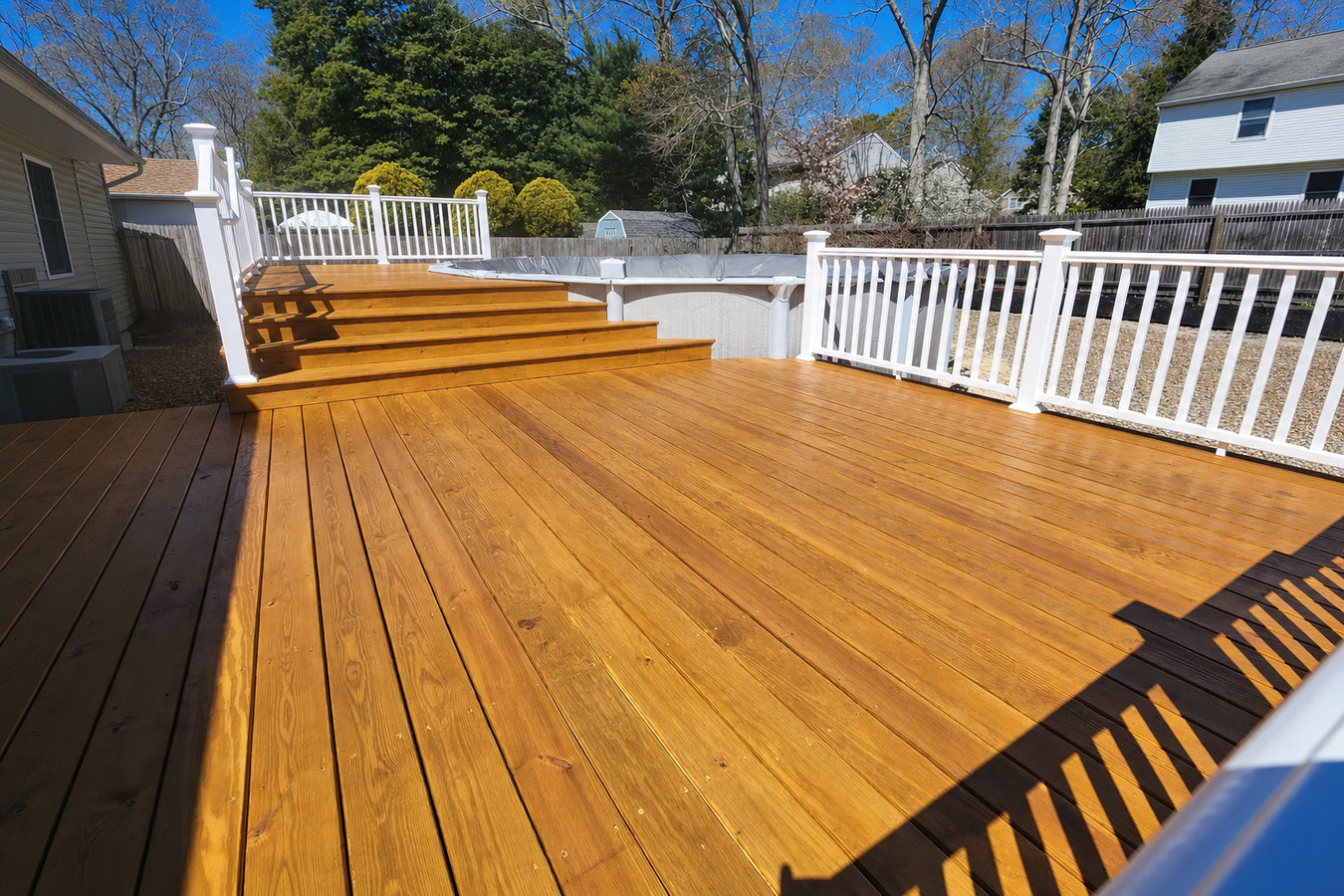
Delaware's winters put unprotected wood through a harsh cycle - moisture soaks in during mild spells, then freezes and expands, splitting the surface fibers from the inside. Regular staining and sealing every one to two years is the most cost-effective way to extend a wood deck's lifespan. We clean the surface, apply a penetrating oil-based sealer, and schedule the work in the late summer window before temperatures drop.
Delaware summers are warm and humid through July and August, and a pergola or covered structure turns a hot deck into a usable outdoor room. We build open-lattice pergolas and fully covered deck additions set on footings drilled to code depth in the clay soil that covers most of Delaware County, sized to stay in place through seasonal ground movement.
Delaware has a housing stock that spans a wider age range than most central Ohio suburbs. Homes near downtown and around Ohio Wesleyan University were built as far back as the late 1800s and early 1900s, and many have original wood-framed porches or attached deck structures that have not been replaced in decades. These older homes sit on foundations built before modern waterproofing standards, and their above-grade structures often show the effects of years of freeze-thaw cycles without adequate maintenance. Delaware's winters are reliably cold - temperatures drop below freezing repeatedly from November through March, and the repeated cycle of moisture absorption and expansion inside wood fibers is what causes boards to split and check. Homes built in the 1960s and 1970s in Delaware's mid-century neighborhoods often have original pressure-treated decks with ledger boards attached without proper flashing - the single most common structural problem we find on inspections in this city.
Delaware County's faster-growing areas on the north and east sides of the city have newer housing stock, but those homes face a different set of pressures. The city has grown quickly, and many newer subdivisions were built on the edges of town where farmland was converted to residential use. That transition means some properties sit on fill soil or disturbed ground that does not drain as reliably as undisturbed earth. Combined with Delaware's dense clay subsoil, drainage around footings and structures is a genuine engineering consideration on every job. The Olentangy River runs through Delaware, and low-lying properties near its corridor have documented drainage challenges. Getting deck footings to the correct depth and keeping the structure properly graded for drainage is as important in newer Delaware subdivisions as it is in the older neighborhoods near downtown.
Our crew works throughout Delaware regularly, and the city's mix of historic homes and new construction means we navigate both types of projects in the same municipality. Delaware's historic district - particularly the blocks near downtown along Sandusky Street and the neighborhoods around Ohio Wesleyan University - includes homes that may require review by the city's Historic Preservation Commission before a permit is issued for any exterior work visible from the street. We check the zoning map and historic district boundaries for every Delaware address before we submit a permit application so we are not caught off guard mid-project.
The Delaware County Fairgrounds - one of the largest county fair facilities in Ohio and home to the famous Little Brown Jug harness race each September - sits in the middle of the city and is a reference point most Delaware residents know well. Neighborhoods on the south and west sides of the fairgrounds tend to be the older in-town neighborhoods, while areas further north and east have the newer subdivisions that have gone up over the past two decades. US Route 23 runs north-south through Delaware as the main corridor, and most of our Delaware jobs are concentrated in the neighborhoods on either side of that route.
We also serve homeowners in Westerville directly to the south, and in Columbus further south along Route 23. Whether you're in the historic blocks near downtown Delaware or in one of the newer neighborhoods on the edge of town, the process is the same - we assess the site, pull the permits, and build to the Ohio residential code requirements for this area.
Call or submit the estimate form and we will reply within one business day. For most Delaware addresses, we can schedule an on-site visit within the week.
We walk the site, take measurements, and review the existing structure if it is a repair job. You receive a written estimate that breaks out labor, materials, and any permit fees separately - no surprises in the final invoice.
We submit the permit application to the Delaware Building Department and coordinate material delivery to arrive close to the permitted start date. You do not need to be present during delivery or permit review.
We complete the build, schedule the city inspection, and walk the finished project with you before we consider the job done. Any punch-list items are addressed before final payment.
We serve all of Delaware - from the historic neighborhoods near Ohio Wesleyan to the newer subdivisions on the north and east sides of town. Call or submit the form and we will reply within one business day.
(380) 259-5083Delaware is a city of roughly 43,000 people about 25 miles north of Columbus along US Route 23, and it carries a distinct identity that sets it apart from the standard Columbus suburb. The presence of Ohio Wesleyan University - a private liberal arts school founded in 1842 that sits right in the middle of the city - gives Delaware a college-town character that most nearby municipalities lack. The neighborhoods closest to campus and the downtown historic district along Sandusky Street feature Victorian, Craftsman, and Colonial Revival homes that are among the oldest in Delaware County. These in-town neighborhoods have mature tree canopies, brick sidewalks, and architectural details that reflect a century or more of investment by long-term homeowners.
Beyond the historic core, Delaware has grown substantially over the past two decades as Delaware County has become one of the faster-growing counties in Ohio. New subdivisions have been developed on the north and east sides of the city, where farmland has given way to two-story Colonial and traditional-style homes with attached garages and larger lots. The result is a city with genuinely different housing stock from neighborhood to neighborhood - older brick and wood-sided homes in the center, newer vinyl-sided construction on the edges. Homeowners here tend to have real equity in their properties and invest in upkeep. The Westerville area just to the south shares many of the same demand drivers, and Pickerington to the southeast is another fast-growing community we serve with similar newer subdivision housing stock.
Get a one-of-a-kind deck tailored exactly to your home and lifestyle.
Learn MoreLow-maintenance composite boards that stay beautiful year after year.
Learn MoreIndustry-leading Trex materials installed for lasting outdoor enjoyment.
Learn MoreDurable pressure-treated lumber decks built to handle Ohio seasons.
Learn MoreProtect and refresh your deck with professional staining and sealing.
Learn MoreClean, low-maintenance vinyl fences that enhance your property's curb appeal.
Learn MoreClassic wood privacy fences that add security and seclusion.
Learn MoreEnjoy the outdoors bug-free with a custom screened enclosure.
Learn MoreTurn your backyard into a full entertaining hub with an outdoor kitchen.
Learn MoreCall us today or submit the estimate form - we serve all of Delaware and reply within one business day. Spring and summer build slots fill up fast, so the sooner you reach out, the sooner we can get on your schedule.